
This blog covers days 16 – 23 of our Tasman Sea crossing, continued from the previous blog(s) which covered days 0 – 7 and 8 – 15 respectively.
Day 16 – first news of the STORM
Day 16 was a brutal day, mainly because I felt so tired.
It was pitch black overnight, very cloudy and overcast.
Even though the sea state was calming, it’s not nice rowing when it’s so dark, you can’t see the water or the waves, or judge where your blades need to be in the water.
Time also goes even slower than normal as there is nothing to look at.
It’s a completely different feeling as compared to rowing with a clear sky full of stars to gaze at in wonder.
I could not manage to get any decent sleep on my rest shifts through the night, no matter how tired I felt which was frustrating.
We have been heading in a south-westerly direction and apparently according to our weather team we have another 90nm to go before we can turn and run directly west towards Australia.
As the day wore on my backside started to get really painful while rowing.
I started taking Ibuprofen.
I finally managed a couple of better sleeps during my afternoon breaks.
At 6PM my log shows the state of mind I was struggling with:
“I really don’t want to go through this kind of experience ever again. I’ve been there done this enough now. It’s fucking brutal. It’s fucking hard. It’s fucking exhausting at 51 years of age. Surely I can find other adventures which interest me, but don’t require me to brutalize myself! Why the fuck are we not using the wind and a sail? Human powered rowing boats are not the future for me. Let’s see if I can get through tonight.”
That afternoon clouds sent us some ominous news that we did not want to hear, but also we knew at some stage would be coming.
There is a tropical low-pressure system starting to build on the New South Wales coastline which could hit us in 6 – 7 days’ time.
Day 17 – The Middleton and Elizabeth reef
I was determined overnight to start sleeping better during my rest shifts.
So I made two changes.
Firstly, I made a more comfortable pillow out of my waterproof blanket.
Secondly, I did some breath work before I slept.
20 deep breaths and then a breath hold for as long as possible.
It seemed to work well, and I slept much better through the rest shifts.
I got through the night in much better form and come day 17, I felt so much better and more positive than the previous day, what a difference sleep makes!
We made great progress all night, still heading in a south-westerly direction, our speed never dropping below 2 knots.
I cut up a sleeping mat to make a more comfortable rowing seat for my poor backside which had been getting very sore.
By now we are closing in on a tiny island called Lord Howe Island, 120nm to our south west.
Almost directly in front of us are the infamous Middleton and Elizabeth Reefs.
These two reefs are 600km from mainland Australia and are separated from each other by about 46km.
The reefs are topographical miracles but navigational nightmares, especially for large vessels who are unaware of their presence.
Rising up from the middle of the very deep ocean to a point just 1m above the water surface, they are barely visible but dangerous navigational hazards waiting to catch unprepared vessels. They have been the scene of many shipping disasters over the years.
We were speaking back and forth with our weather routing team about the best approach to get around the reefs.
Would we go south or to the north?
As we got closer we found we were being pushed directly towards the 46km gap between them. I wondered if it was worth trying to sneak through this gap?
However the weather routers warned against this idea.
As we got closer Luke and I kept discussing and monitoring what would work best. Getting close to a reef in the middle of the ocean in a tiny rowing boat (with no engine to get you out of trouble) is definitely anxiety producing, we decided we wanted to give it a good clearance for safety reasons.
That evening we were rowing at an average speed of 3 knots with the closest point of Australia now only 750km away.
Day 18 – time for a swim
I was blessed during the night to see the most incredible moonrise that evening I have ever seen.
The moon rose over the horizon like a ball of fire.
I have never seen a moonrise like this before.
It soon rose quickly higher into the sky and I was then treated to a night of shooting stars.
Never have I seen so many shooting stars as rowing the Tasman.
Sometimes 5 – 6 per night.
One shooting star was so bright it was like a huge flare overhead.
It illuminated the entire boat and woke Luke up in the cabin.
He poked his head out and asked “what was that?”.
It was so bright, the intensity of it scared me, it felt apocalyptic.
By the morning we are 50nm away from Middleton and Elizabeth reefs, heading straight towards them and still trying to make the decision to run north or south.
Finally we decide to try and run 5 – 10nm to the north of them.
Day 18 was brutally hot.
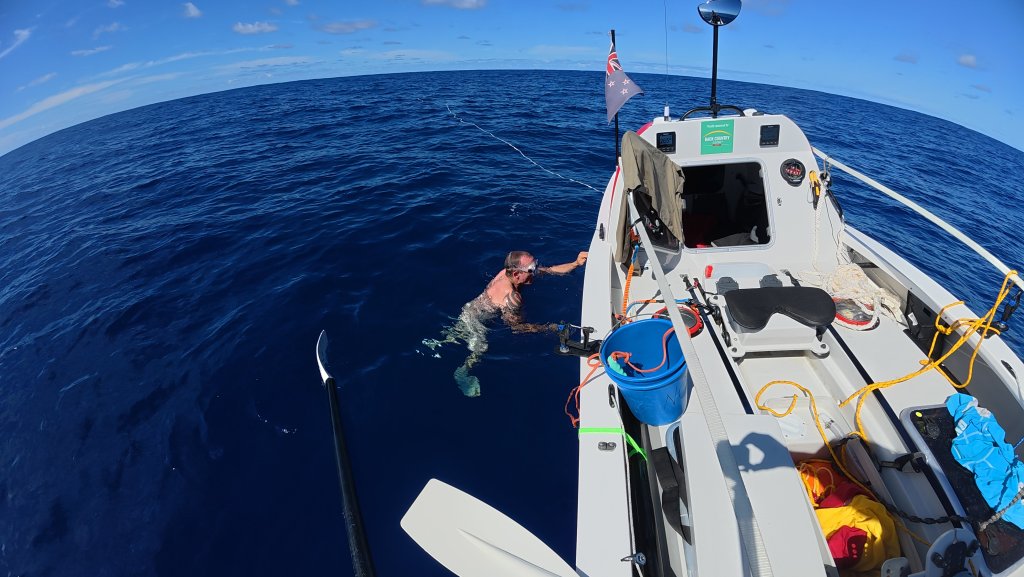
During the afternoon we stopped rowing and decided to cool off with a swim.
We also took the opportunity to clean the hull of the boat which had some marine life growing on it.
We were wary getting into the water. Although it was very calm, we had a very good look around for any big fish first!
After the swim I used saltwater sailor soap on the back deck and had a saltwater bath which felt very nice.
I did some drone shots of Luke rowing during the afternoon. Flying the drone is always risky and stressful as recovering it at sea from a small moving boat is challenging to say the least without dropping it or having your fingers cut by the propellors.
Then it was back to rowing, with no wind the boat felt heavy and the strain of the oars was hurting the tendons in my right forearm.
Fortunately, as darkness fell, we were blessed with 5 – 6 knots of tail wind.
It felt like the brakes had been released and was just enough assistance to take the pressure off my forearms and make rowing more bearable.
We have a 1-knot current pushing us along and we are now about 620 kilometres to the closest point in Australia. We have travelled almost 1,800 kilometres since leaving New Zealand, so we’re definitely 2/3 of the way there.
Day 19 – Yamba or Ballina?
At 2AM, in the early hours of the morning we passed 9nm to the north of Middleton reef.
It was a relief to get safely past without issue.
It would have been interesting to see the reefs, but we would have had to get very close for that.
As daylight approached we are now only 480km from Australia.
Talking back and forth with the weather routers, it was looking like the two best possibilities for landing were Yamba or Ballina.
I had come into Ballina on my first attempt to row the Tasman.
It had a nasty bar with big breaking surf at times, and a reputation as a great white shark hangout. I knew what to expect there.
Yamba was a river entrance and meant we would need to time the tide in order to come in with the incoming current.
This is not ideal for us in a human powered boat as we have little control over timing.
We put our landing into the ‘let’s keep thinking about it’ bucket and kept rowing.
I was messaging my wife Stephanie back in Thailand who was planning to fly down with our two daughters Kate and Rachel to see our arrival.
As we were 40 days earlier than expected, this was quite a disruption to plans and they had to book tickets quickly and leave asap.
Hearing they were committed to coming down to see us land really lifted my spirits though.
We maintained a steady 3 – 3.5 knots all through the day with a slight tailwind and favourable currents.
Day 20 – a bad night
On the morning of day 20 we are 320 km from Ballina. My log reads:
“It was a brutal night with a very confused sea state and 15 knots of wind through the night. Very bumpy and very difficult to row, continually catching the oars, catching crabs, quite dangerous. The oars became weapons of destruction on the back deck. It took our full two hours of concentration on each rowing shift with the adrenaline pumping to keep moving safely.
We were trying to go west/south west, but it soon became apparent throughout the night we were being pushed more south. We ended up heading about 280 degrees. We were making good speed, even though it was bumpy as shit. In the resting shifts we were so full of adrenaline from rowing, it was very difficult to go to sleep, neither of us slept very well.“
We did two hard night shifts each and then by 2am we decided we needed a break. We set the auto helm to 220 degrees true, and we noticed the boat could drift about 280 degrees, I got back into the front cabin and Luke in the back cabin and we had a bit of a rest for a few hours. I managed to sleep on and off for about one hour and thirty minutes. There was so much rocking around in the front cabin, that by 6am I decided to get up and continue rowing because I couldn’t sleep.
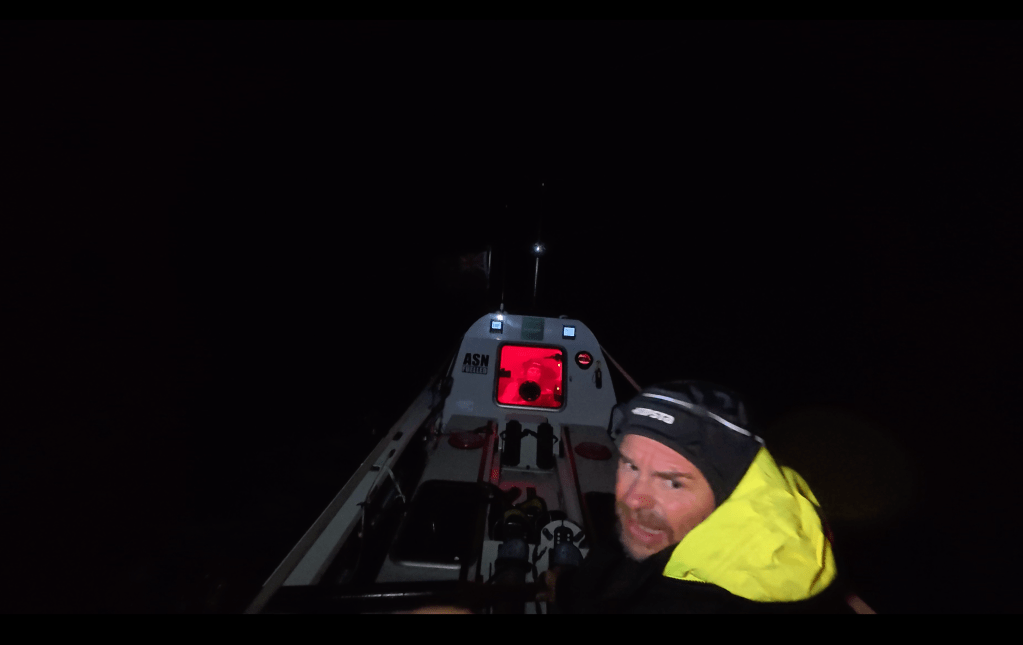
Back in the rowing seat I rowed two hours until 8am, by now I felt really tired, I hadn’t slept much at all during the night, very lethargic and low on energy, I was also getting really hungry. Luke cooked up a big breakfast for both of us, I ate that slowly during my rowing shift, but by the time day came, I was completely exhausted.
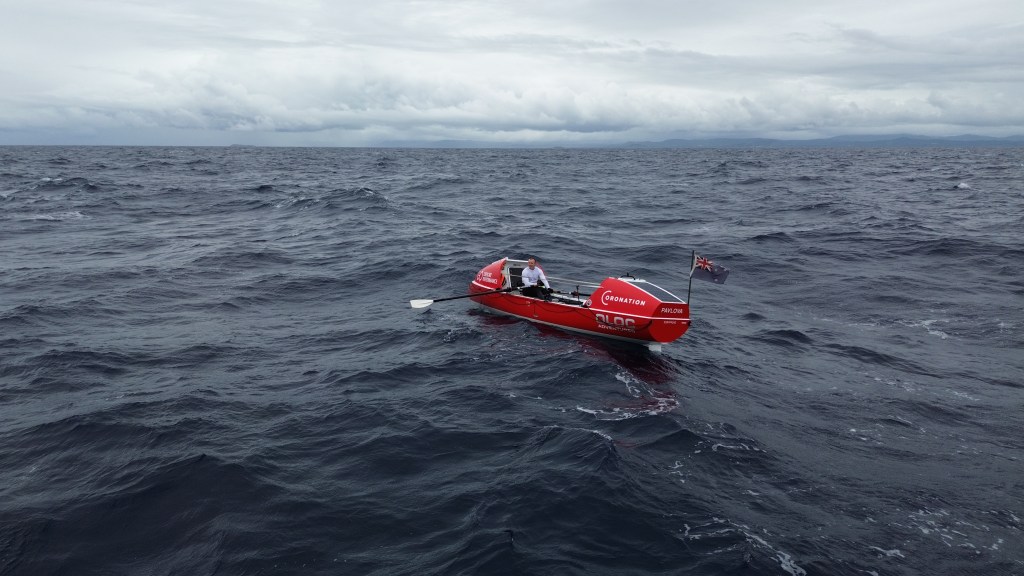
I managed another drone flight in the morning in 10 – 15 knots of wind, even managing to catch the drone again. It was good to get some drone shots with a rougher sea state.
The latest weather information showed we have good wind coming in for the next few days but something big and nasty is brewing for Sunday. We knew we needed to get in by Saturday latest if we are to avoid getting caught out in a nasty low pressure system.
Day 21 – Recharging for the final push
We were so tired from the previous evening’s row we both felt sick. Luke made a comment to me he thought the cheese may be off as he felt nauseous. I told him I felt the same, and we came to the conclusion it was exhaustion rather than the cheese.
We had 15 knots of wind all day, generally from the right direction so we continued rowing in a semi-exhausted state. With the current working in our favour, as darkness approached, we let the boat drift for a while to monitor the direction. She was being pushed along generally in a favourable direction by the combination of wind and current. So we decided to set the autohelm and use it as a chance to recover some energy for the final push into land. I spent the night being smashed around in my torture chamber in the front cabin, but it was better than being smashed around in the dark on the back deck.
By 9:15AM we were only 215km from Australia.
I made some phone calls on the sat phone during the day.
One of the calls was to my daughter’s class, I was on speakerphone with their teacher and all the students.
The children had prepared some questions for me and when it came to saying goodbye at the end, I couldn’t help but start crying.
I don’t cry much but emotionally this turned out to be the start of many tears over the next three days.
My log reads:
“I spoke to Luke on the back deck after the call, I said there’s 10 years now of pent-up emotion about to be let out at the end of this crossing. I really don’t want to fuck up the next two days and have to repeat this whole thing all over again. My time is done with the Tasman. I’ve dedicated enough years of my life to it. It’s been an immense challenge. I feel privileged to have had it in my life, but it’s time to get it finished and it’s time to move on.”
Luke and I were now completely fixated on the numbers.
How fast were we going?
What was the weather and currents doing?
Where should we aim for?
What time could we possibly get in?
Can we make it before the storm arrives?
Life had become very focused on working through the scenarios to try and make it to shore safely before the low pressure arrived.
Day 22 – crossing the continental shelf and the final push
By 7:30AM we were now 120km from Yamba. We were pushed along all night by 15 – 17 knots of wind, there was a following sea but also a second pattern of waves coming in from the south. Every now and again a large wave from the south would come in right and break right over the roof, smashing the oars from our hands and knocking everything and everyone in the boat all over the place.
But on we row. We are now down to 1hr shifts through night and day. We are both exhausted but completely focused on keeping the boat moving as efficiently as possible. 2-hour shifts are too tiring. Luke has started on a cocktail of Ibuprofen and caffeine.
As we get closer to the Australian coastline we have the East Australian Current (EAC) to contend with, a strong, southerly-setting current we expect to push us south. We also have the East Australian Shipping channel to cross and we have the continental shelf to pass over where the water depth rises from 3000m to 100m over only a few horizontal kilometres. This is a place where we need to be careful of powerful waves being formed by the steep change in seafloor below.
As the day goes by the wind speed increases. We battle on in our one-hour shifts, it’s grey, overcast and wet, as darkness approaches we start to cross the continental shelf and the wind speed has picked up to 25 – 30 knots.
We have been back and forth with the weather routers and the shore team constantly about the best place to land. It now looks like Coffs Harbour would be by far the safest place, with its sheltered breakwaters we could row straight in. Yamba and Ballina in these conditions would not be nice or safe.
To get to Coff’s though, we need to head south/south west. As we start crossing the continental shelf the sea did exactly what we feared. The size of the swells became enormous, three – four times higher than the roof of the boat, rolling in on a north westerly heading. We needed to head southwest, so were in effect trying to run beam on (at right angles) to these massive swells as darkness approached. The power of the swells was terrifying, heightened by the increase in the wind speed. It rapidly became the most intimidating part of the entire crossing for me as I sat on the back deck in the pitch dark, trying to keep the boat moving south while feeling us constantly lifted and dropped by these huge swells. If one broke on us while we were beam on, I was not confident (even though I was tied on) that I would handle the force of a capsize whilst on the back deck in these conditions.
I battled on until 10PM, running on adrenalin and feeling like vomiting until it became too dangerous and difficult to try and point the boat southwest. We had no choice but to run with the weather until at least we crossed the continental shelf and hopefully the sea state would calm down.
So we set the autohelm and let the boat drift in the direction of the swells and wind, while from the safety of the cabins we furiously got back to running numbers and working out if an where we could try and land safely. It was looking more and more like we were going to have a very stormy, rough beach landing in heavy surf if these conditions kept up as we had so little ability to control the direction of the boat. Back and forth through the night we sent SMS’s to the shore team. Various small places along the coast were suggested. However, none of them looked at all as appealing as compared to Coffs Harbour.
At 4AM in the morning I crawled out of the safety of the front cabin and looked out through the wind and the rain and saw something I will never forget. A light flashing in the distance. It was a lighthouse. Our first sight of Australia!
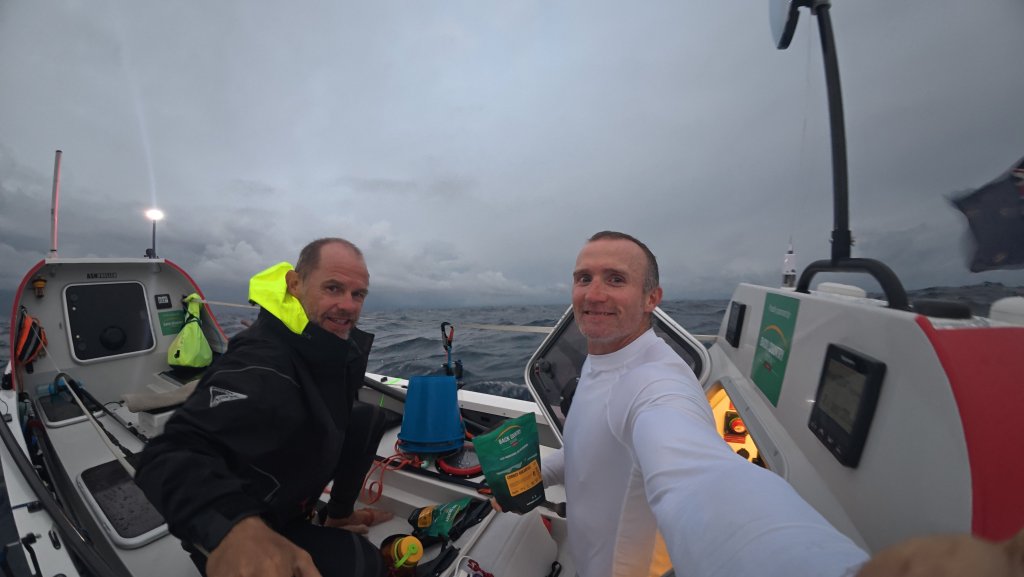
It was an incredibly emotional moment. It seemed like it was our saviour as around the same time we passed over the continental shelf and were now in 70 – 100m of water depth. We hit the East Australian current and found ourselves being pulled south towards Coff’s Harbour, exactly as we needed. The wind started to drop to below 20 knots and the sea state calmed significantly.
We never saw the sun on our final day at sea, it was too grey and overcast. But as daylight appeared, Luke and I had one massive final battle.
There were two islands to the north of Coff’s harbour we had to negotiate (the Solitary islands) and these seemed to cause strange things with the currents. Much to our despair we dropped out of the East Australian current as we got closer to shore and for the final six hours we resorted to rowing together with no time for any breaks. Our speed slowed to 0.7 knots as we fought the counter currents and head winds as we approached the islands.
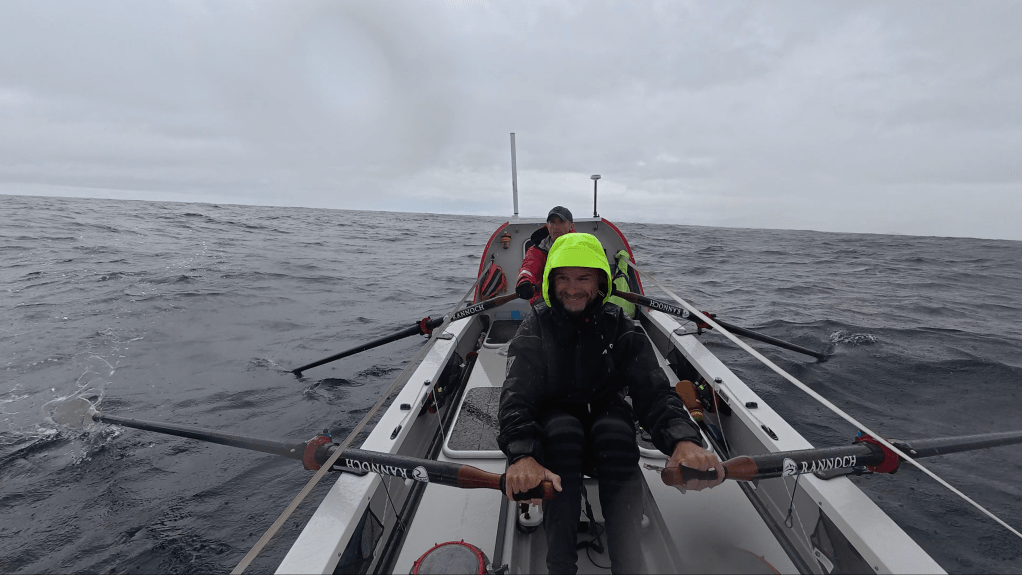
But slowly Coffs Harbour came into view through the mist and the cloud. We saw the breakwaters, I recognised Muttonbird island which I had rowed out past on my first Tasman attempt. About 1km out from Muttonbird island a marine rescue boat came out to guide us in through the entrance. I couldn’t stop crying. Luke had lots of tears as well. We saw small figures on the breakwaters shouting to us which we recognised from afar as our family.
I took the helm on the way in through the breakwaters, standing on the back deck steering, while Luke rowed us slowly all the way into the customs jetty.
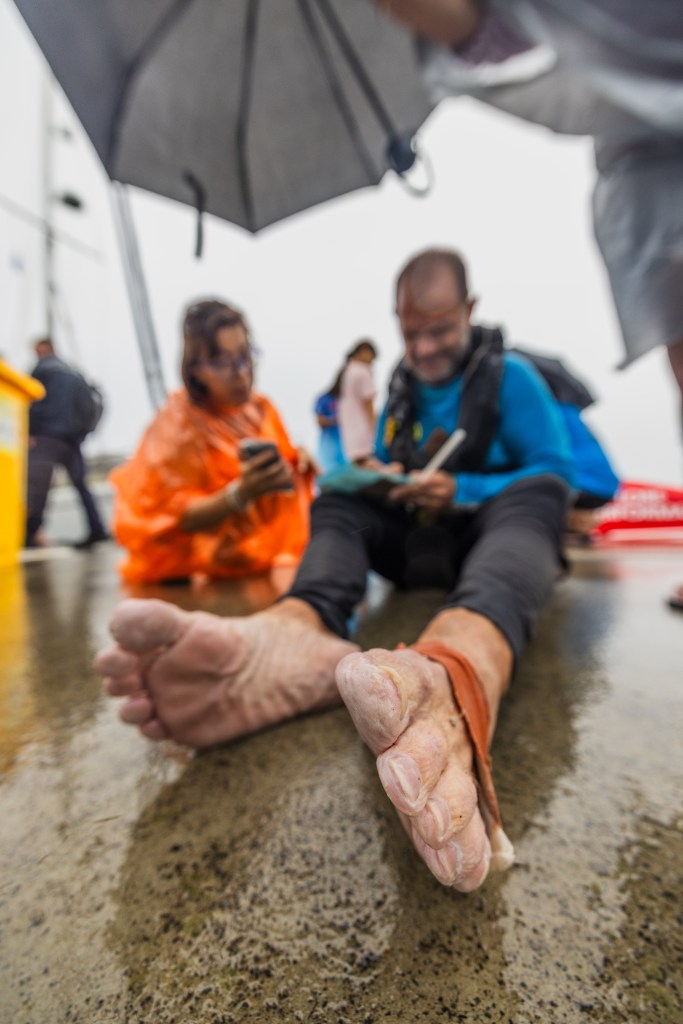
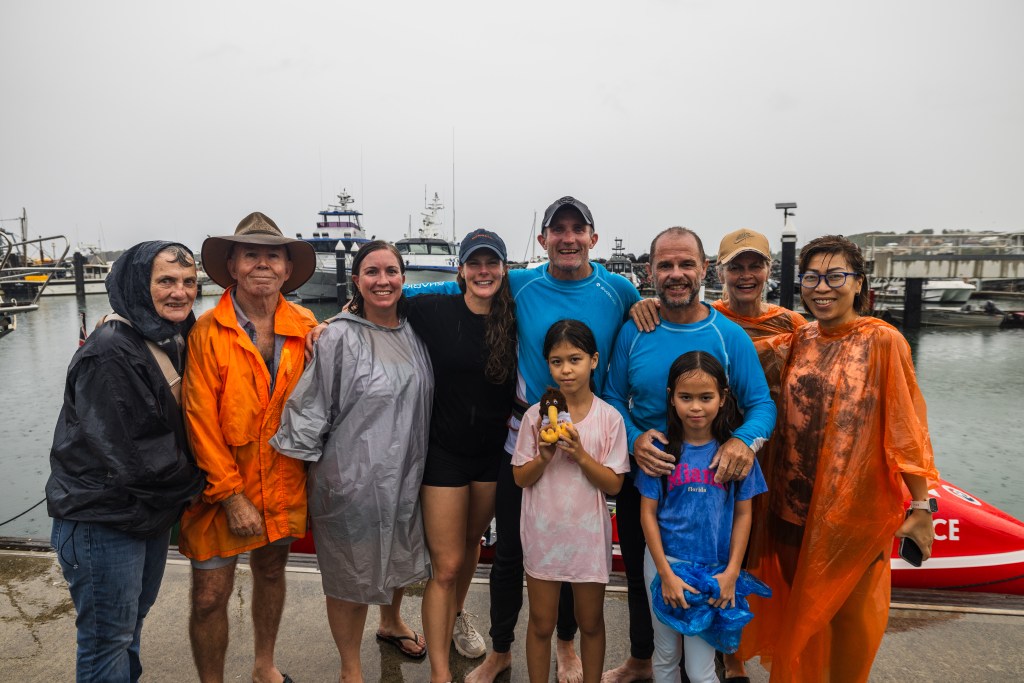
Luke and I stepped onto the jetty in Australia together, 22 days, 4 hours and 40 minutes after departing Houhora in NZ, the voyage completely under our own steam.
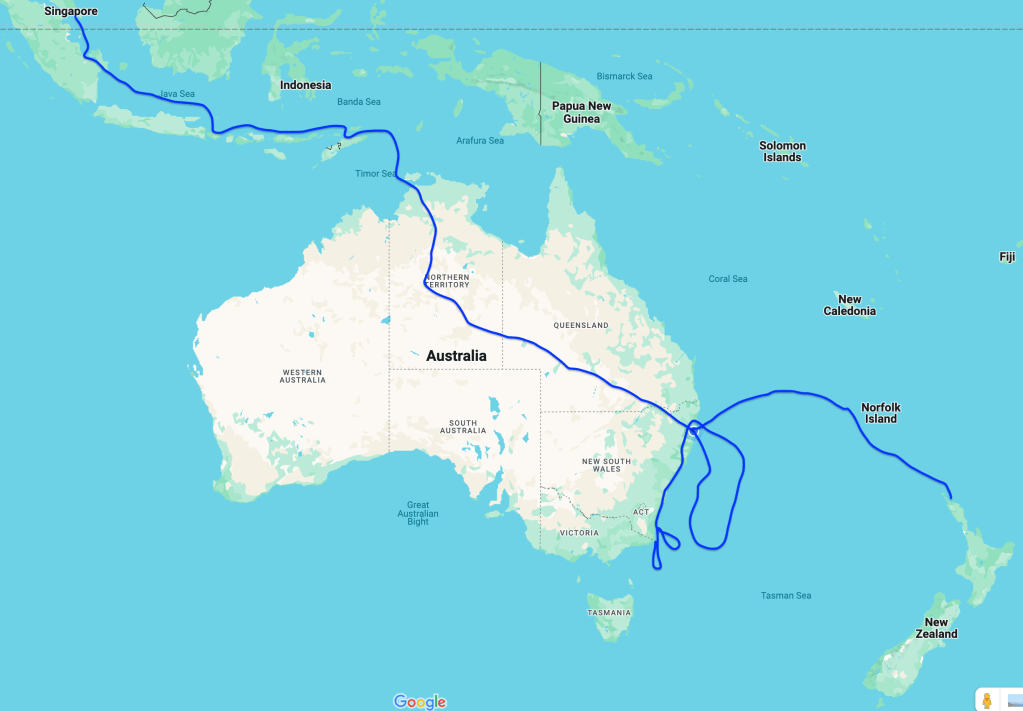
The line between Singapore and New Zealand was finally complete by human power.
The project that I first envisaged over 11-years earlier, that had challenged me, grown me, and changed mine and my family’s life in the most unimaginably positive ways was over. And most fittingly mine and Luke’s family were there to be with us.
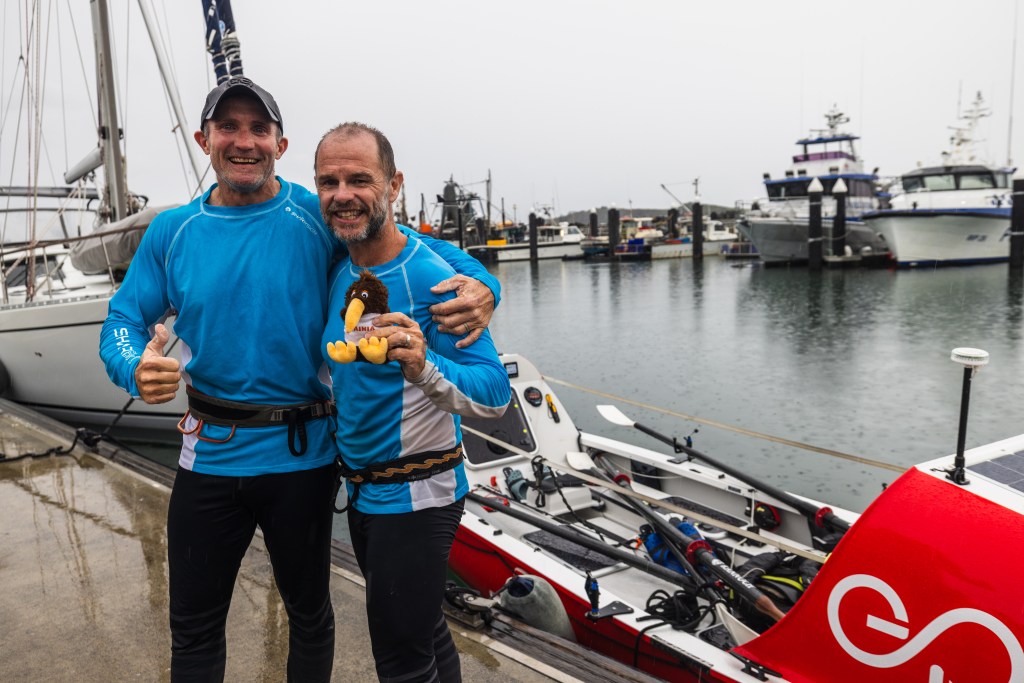
I took with me on the Tasman crossing, a small toy kiwi, given to me by the first man to row the Tasman – Colin Quincey, shortly before he died. He passed me the kiwi with the instructions to carry it onboard with me and pass to him when I finally made it across the Tasman. Unfortunately, now he has passed away, I cannot physically do that, but I carried it in his memory and his honour.
Thank you to the Tasman Sea. We definitely did not conquer you, but you never defeated me.


Leave a comment